http://online.sfsu.edu/~rone/Buddhism/footsteps.htm
Once there was a woman named Kisagotami, whose first-born son died. She was so stricken with grief that she roamed the streets carrying the dead body and asking for help to bring her son back to life. A kind and wise man took her to the Buddha.
The Buddha told her, "Fetch me a handful of mustard seeds and I will bring your child back to life." Joyfully Kisagotami started off to get them. Then the Buddha added, "But the seeds must come from a family that has not known death."
Kisagotami went from door to door in the whole village asking for the mustard seeds, but everyone said, "Oh, there have been many deaths here", "I lost my father", I lost my sister". She could not find a single household that had not been visited by death. Finally Kisagotami returned to the Buddha and said, "There is death in every family. Everyone dies. Now I understand your teaching."
The Buddha said, "No one can escape death and unhappiness. If people expect only happiness in life, they will be disappointed."
Things are not always the way we want them to be, but we can learn to understand them. When we get sick, we go to a doctor and ask:
What's wrong with me?
Why am I sick?
What will cure me?
What do I have to do get well? The Buddha is like a good doctor. First a good doctor diagnoses the illness. Next he finds out what has caused it. Then he decides what the cure is. Finally he prescribes the medicine or gives the treatment that will make the patient well again.
The Four Noble Truths1. There is Suffering Suffering is common to all. 2. Cause of Suffering We are the cause of our suffering. 3. End of Suffering Stop doing what causes suffering. 4. Path to end Suffering Everyone can be enlightened.
1. Suffering: Everyone suffers from these thing
Birth- When we are born, we cry.
Sickness- When we are sick, we are miserable.
Old age- When old, we will have ache and pains and find it hard to get around.
Death- None of us wants to die. We feel deep sorrow when someone dies.
Other things we suffer from are: Being with those we dislike, Being apart from those we love, Not getting what we want, All kinds of problems and disappointments that are unavoidable.
The Buddha did not deny that there is happiness in life, but he pointed out it does not last forever. Eventually everyone meets with some kind of suffering. He said: "There is happiness in life, happiness in friendship, happiness of a family, happiness in a healthy body and mind, ...but when one loses them, there is suffering."
Dhammapada
2. The cause of suffering
The Buddha explained that people live in a sea of suffering because of ignorance and greed. They are ignorant of the law of karma and are greedy for the wrong kind of pleasures. They do things that are harmful to their bodies and peace of mind, so they can not be satisfied or enjoy life.
For example, once children have had a taste of candy, they want more. When they can't have it, they get upset. Even if children get all the candy they want, they soon get tired of it and want something else. Although, they get a stomach-ache from eating too much candy, they still want more. The things people want most cause them the most suffering. Of course, there are basic things that all people should have, like adequate food, shelter, and clothing. Everyone deserve a good home, loving parents, and good friends. They should enjoy life and cherish their possessions without becoming greedy.
3. The end of suffering
To end suffering, one must cut off greed and ignorance. This means changing one's views and living in a more natural and peaceful way. It is like blowing out a candle. The flame of suffering is put out for good. Buddhists call the state in which all suffering is ended Nirvana. Nirvana is an everlasting state of great joy and peace. The Buddha said, "The extinction of desire is Nirvana." This is the ultimate goal in Buddhism. Everyone can realize it with the help of the Buddha's teachings. It can be experienced in this very life.
4. The path to the end of suffering: The path to end suffering is known as the Noble Eightfold Path. It is also known as the Middle Way.
Sunday, July 20, 2008

BASIC TEACHINGS OF THE BUDDHA - THE THREE UNIVERSAL TRUTHS
http://online.sfsu.edu/~rone/Buddhism/footsteps.htm
One day, the Buddha sat down in the shade of a tree and noticed how beautiful the countryside was. Flowers were blooming and trees were putting on bright new leaves, but among all this beauty, he saw much unhappiness. A farmer beat his ox in the field. A bird pecked at an earthworm, and then an eagle swooped down on the bird. Deeply troubled, he asked, "Why does the farmer beat his ox? Why must one creature eat another to live?"
During his enlightenment, the Buddha found the answer to these questions. He discovered three great truths. He explained these truths in a simple way so that everyone could understand them.
1. Nothing is lost in the universe
The first truth is that nothing is lost in the universe. Matter turns into energy, energy turns into matter. A dead leaf turns into soil. A seed sprouts and becomes a new plant. Old solar systems disintegrate and turn into cosmic rays. We are born of our parents, our children are born of us.
We are the same as plants, as trees, as other people, as the rain that falls. We consist of that which is around us, we are the same as everything. If we destroy something around us, we destroy ourselves. If we cheat another, we cheat ourselves. Understanding this truth, the Buddha and his disciples never killed any animal.
2. Everything Changes
The second universal truth of the Buddha is that everything is continuously changing. Life is like a river flowing on and on, ever-changing. Sometimes it flows slowly and sometimes swiftly. It is smooth and gentle in some places, but later on snags and rocks crop up out of nowhere. As soon as we think we are safe, something unexpected happens.
Once dinosaurs, mammoths, and saber-toothed tigers roamed this earth. They all died out, yet this was not the end of life. Other life forms like smaller mammals appeared, and eventually humans, too. Now we can even see the Earth from space and understand the changes that have taken place on this planet. Our ideas about life also change. People once believed that the world was flat, but now we know that it is round.
3. Law of Cause and Effect
The third universal truth explained by the Buddha is that there is continuous changes due to the law of cause and effect. This is the same law of cause and effect found in every modern science textbook. In this way, science and Buddhism are alike.
The law of cause and effect is known as karma. Nothing ever happens to us unless we deserves it. We receive exactly what we earn, whether it is good or bad. We are the way we are now due to the things we have done in the past. Our thoughts and actions determine the kind of life we can have. If we do good things, in the future good things will happen to us. If we do bad things, in the future bad things will happen to us. Every moment we create new karma by what we say, do, and think. If we understand this, we do not need to fear karma. It becomes our friend. It teaches us to create a bright future. The Buddha said,
"The kind of seed sown
will produce that kind of fruit.
Those who do good will reap good results.
Those who do evil will reap evil results.
If you carefully plant a good seed,
You will joyfully gather good fruit."
Dhammapada
One day, the Buddha sat down in the shade of a tree and noticed how beautiful the countryside was. Flowers were blooming and trees were putting on bright new leaves, but among all this beauty, he saw much unhappiness. A farmer beat his ox in the field. A bird pecked at an earthworm, and then an eagle swooped down on the bird. Deeply troubled, he asked, "Why does the farmer beat his ox? Why must one creature eat another to live?"
During his enlightenment, the Buddha found the answer to these questions. He discovered three great truths. He explained these truths in a simple way so that everyone could understand them.
1. Nothing is lost in the universe
The first truth is that nothing is lost in the universe. Matter turns into energy, energy turns into matter. A dead leaf turns into soil. A seed sprouts and becomes a new plant. Old solar systems disintegrate and turn into cosmic rays. We are born of our parents, our children are born of us.
We are the same as plants, as trees, as other people, as the rain that falls. We consist of that which is around us, we are the same as everything. If we destroy something around us, we destroy ourselves. If we cheat another, we cheat ourselves. Understanding this truth, the Buddha and his disciples never killed any animal.
2. Everything Changes
The second universal truth of the Buddha is that everything is continuously changing. Life is like a river flowing on and on, ever-changing. Sometimes it flows slowly and sometimes swiftly. It is smooth and gentle in some places, but later on snags and rocks crop up out of nowhere. As soon as we think we are safe, something unexpected happens.
Once dinosaurs, mammoths, and saber-toothed tigers roamed this earth. They all died out, yet this was not the end of life. Other life forms like smaller mammals appeared, and eventually humans, too. Now we can even see the Earth from space and understand the changes that have taken place on this planet. Our ideas about life also change. People once believed that the world was flat, but now we know that it is round.
3. Law of Cause and Effect
The third universal truth explained by the Buddha is that there is continuous changes due to the law of cause and effect. This is the same law of cause and effect found in every modern science textbook. In this way, science and Buddhism are alike.
The law of cause and effect is known as karma. Nothing ever happens to us unless we deserves it. We receive exactly what we earn, whether it is good or bad. We are the way we are now due to the things we have done in the past. Our thoughts and actions determine the kind of life we can have. If we do good things, in the future good things will happen to us. If we do bad things, in the future bad things will happen to us. Every moment we create new karma by what we say, do, and think. If we understand this, we do not need to fear karma. It becomes our friend. It teaches us to create a bright future. The Buddha said,
"The kind of seed sown
will produce that kind of fruit.
Those who do good will reap good results.
Those who do evil will reap evil results.
If you carefully plant a good seed,
You will joyfully gather good fruit."
Dhammapada
Friday, July 18, 2008
THE LIFE OF THE BUDDHA
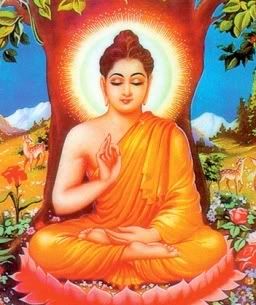
http://online.sfsu.edu/~rone/Buddhism/footsteps.htm
Life in the Palace
Buddhism is one of the major religions in the world. It began around 2,500 years ago in India when Siddhartha Gautama discovered how to bring happiness into the world. He was born around 566 BC, in the small kingdom of Kapilavastu. His father was King Suddhodana and his mother was Queen Maya.
Soon after Prince Siddhartha was born, the wise men predicted that he would become a Buddha. When the king heard this, he was deeply disturbed, for he wanted his son to become a mighty ruler. He told Queen Maya, "I will make life in the palace so pleasant that our son will never want to leave."
At the age of sixteen, Prince Siddhartha married a beautiful princess, Yasodhara. The king built them three palaces, one for each season, and lavished them with luxuries. They passed their days in enjoyment and never thought about life outside the palace.
The Four Sights
Soon Siddhartha became disillusioned with the palace life and wanted to see the outside world. He made four trips outside the palace and saw four things that changed his life. On the first three trips, he saw sickness, old age and death. He asked himself, "How can I enjoy a life of pleasure when there is so much suffering in the world?"
On his fourth trip, he saw a wandering monk who had given up everything he owned to seek an end to suffering. "I shall be like him." Siddhartha thought.
Renunciation
Leaving his kingdom and loved ones behind, Siddhartha became a wandering monk. He cut off his hair to show that he had renounced the worldly lifestyle and called himself Gautama. He wore ragged robes and wandered from place to place. In his search for truth, he studied with the wisest teachers of his day. None of them knew how to end suffering, so he continued the search on his own.
For six years he practiced severe asceticism thinking this would lead him to enlightenment. He sat in meditation and ate only roots, leaves and fruit. At times he ate nothing. He could endure more hardships than anyone else, but this did not take him anywhere. He thought, "Neither my life of luxury in the palace nor my life as an ascetic in the forest is the way to freedom. Overdoing things can not lead to happiness. " He began to eat nourishing food again and regained his strength.
Enlightenment
On a full-moon day in May, he sat under the Bodhi tree in deep meditation and said. "I will not leave this spot until I find an end to suffering." During the night, he was visited by Mara, the evil one, who tried to tempt him away from his virtuous path. First he sent his beautiful daughters to lure Gautama into pleasure. Next he sent bolts of lightning, wind and heavy rain. Last he sent his demonic armies with weapons and flaming rocks. One by one, Gautama met the armies and defeated them with his virtue.
As the struggle ended, he realized the cause of suffering and how to remove it. He had gained the most supreme wisdom and understood things as they truly are. He became the Buddha, 'The Awakened One'. From then on, he was called Shakyamuni Buddha.
The Buddha Teaches
After his enlightenment, he went to the Deer Park near the holy city of Benares and shared his new understanding with five holy men. They understood immediately and became his disciples. This marked the beginning of the Buddhist community.
For the next forty-five years, the Buddha and his disciples went from place to place in India spreading the Dharma, his teachings. Their compassion knew no bounds, they helped everyone along the way, beggars, kings and slave girls. At night, they would sleep where they were; when hungry they would ask for a little food.
Whenever the Buddha went, he won the hearts of the people because he dealt with their true feelings. He advised them not to accept his words on blind faith, but to decide for themselves whether his teachings are right or wrong, then follow them. He encouraged everyone to have compassion for each other and develop their own virtue, "You should do your own work, for I can teach only the way."
He never became angry or impatient or spoke harshly to anyone, not even to those who opposed him. He always taught in such a way that everyone could understand. Each person thought the Buddha was speaking especially for him. The Buddha told his followers to help each other on the Way. Following is a story of the Buddha living as an example to his disciples.
Once the Buddha and Ananda visited a monastery where a monk was suffering from a contagious disease. The poor man lay in a mess with no one looking after him. The Buddha himself washed the sick monk and placed him on a new bed. Afterwards, he admonished the other monks. "Monks, you have neither mother nor father to look after you. If you do not look after each other, who will look after you? Whoever serves the sick and suffering, serves me."
The Last Years
Shakyamuni Buddha passed away around 486 BC at the age of eighty. Although he has left the world, the spirit of his kindness and compassion remains.
The Buddha realized that that he was not the first to become a Buddha. "There have been many Buddhas before me and will be many Buddhas in the future," The Buddha recalled to his disciples. "All living beings have the Buddha nature and can become Buddhas." For this reason, he taught the way to Buddhahood.
The two main goals of Buddhism are getting to know ourselves and learning the Buddha's teachings. To know who we are, we need to understand that we have two natures. One is called our ordinary nature, which is made up of unpleasant feelings such as fear, anger, and jealousy. The other is our true nature, the part of us that is pure, wise, and perfect. In Buddhism, it is called the Buddha nature. The only difference between us and the Buddha is that we have not awakened to our true nature.
Life in the Palace
Buddhism is one of the major religions in the world. It began around 2,500 years ago in India when Siddhartha Gautama discovered how to bring happiness into the world. He was born around 566 BC, in the small kingdom of Kapilavastu. His father was King Suddhodana and his mother was Queen Maya.
Soon after Prince Siddhartha was born, the wise men predicted that he would become a Buddha. When the king heard this, he was deeply disturbed, for he wanted his son to become a mighty ruler. He told Queen Maya, "I will make life in the palace so pleasant that our son will never want to leave."
At the age of sixteen, Prince Siddhartha married a beautiful princess, Yasodhara. The king built them three palaces, one for each season, and lavished them with luxuries. They passed their days in enjoyment and never thought about life outside the palace.
The Four Sights
Soon Siddhartha became disillusioned with the palace life and wanted to see the outside world. He made four trips outside the palace and saw four things that changed his life. On the first three trips, he saw sickness, old age and death. He asked himself, "How can I enjoy a life of pleasure when there is so much suffering in the world?"
On his fourth trip, he saw a wandering monk who had given up everything he owned to seek an end to suffering. "I shall be like him." Siddhartha thought.
Renunciation
Leaving his kingdom and loved ones behind, Siddhartha became a wandering monk. He cut off his hair to show that he had renounced the worldly lifestyle and called himself Gautama. He wore ragged robes and wandered from place to place. In his search for truth, he studied with the wisest teachers of his day. None of them knew how to end suffering, so he continued the search on his own.
For six years he practiced severe asceticism thinking this would lead him to enlightenment. He sat in meditation and ate only roots, leaves and fruit. At times he ate nothing. He could endure more hardships than anyone else, but this did not take him anywhere. He thought, "Neither my life of luxury in the palace nor my life as an ascetic in the forest is the way to freedom. Overdoing things can not lead to happiness. " He began to eat nourishing food again and regained his strength.
Enlightenment
On a full-moon day in May, he sat under the Bodhi tree in deep meditation and said. "I will not leave this spot until I find an end to suffering." During the night, he was visited by Mara, the evil one, who tried to tempt him away from his virtuous path. First he sent his beautiful daughters to lure Gautama into pleasure. Next he sent bolts of lightning, wind and heavy rain. Last he sent his demonic armies with weapons and flaming rocks. One by one, Gautama met the armies and defeated them with his virtue.
As the struggle ended, he realized the cause of suffering and how to remove it. He had gained the most supreme wisdom and understood things as they truly are. He became the Buddha, 'The Awakened One'. From then on, he was called Shakyamuni Buddha.
The Buddha Teaches
After his enlightenment, he went to the Deer Park near the holy city of Benares and shared his new understanding with five holy men. They understood immediately and became his disciples. This marked the beginning of the Buddhist community.
For the next forty-five years, the Buddha and his disciples went from place to place in India spreading the Dharma, his teachings. Their compassion knew no bounds, they helped everyone along the way, beggars, kings and slave girls. At night, they would sleep where they were; when hungry they would ask for a little food.
Whenever the Buddha went, he won the hearts of the people because he dealt with their true feelings. He advised them not to accept his words on blind faith, but to decide for themselves whether his teachings are right or wrong, then follow them. He encouraged everyone to have compassion for each other and develop their own virtue, "You should do your own work, for I can teach only the way."
He never became angry or impatient or spoke harshly to anyone, not even to those who opposed him. He always taught in such a way that everyone could understand. Each person thought the Buddha was speaking especially for him. The Buddha told his followers to help each other on the Way. Following is a story of the Buddha living as an example to his disciples.
Once the Buddha and Ananda visited a monastery where a monk was suffering from a contagious disease. The poor man lay in a mess with no one looking after him. The Buddha himself washed the sick monk and placed him on a new bed. Afterwards, he admonished the other monks. "Monks, you have neither mother nor father to look after you. If you do not look after each other, who will look after you? Whoever serves the sick and suffering, serves me."
The Last Years
Shakyamuni Buddha passed away around 486 BC at the age of eighty. Although he has left the world, the spirit of his kindness and compassion remains.
The Buddha realized that that he was not the first to become a Buddha. "There have been many Buddhas before me and will be many Buddhas in the future," The Buddha recalled to his disciples. "All living beings have the Buddha nature and can become Buddhas." For this reason, he taught the way to Buddhahood.
The two main goals of Buddhism are getting to know ourselves and learning the Buddha's teachings. To know who we are, we need to understand that we have two natures. One is called our ordinary nature, which is made up of unpleasant feelings such as fear, anger, and jealousy. The other is our true nature, the part of us that is pure, wise, and perfect. In Buddhism, it is called the Buddha nature. The only difference between us and the Buddha is that we have not awakened to our true nature.
Wednesday, July 16, 2008
达摩祖师 Bodhidharma
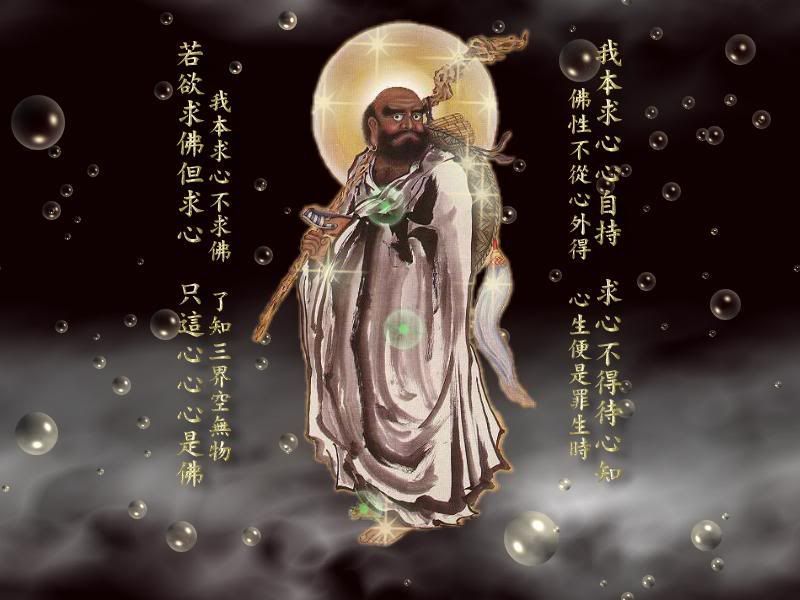 Da Mo . . .
The Indian Buddhist monk Da Mo Or as he is also known, Bodhidharma, Bodhitara, P'u-t'i Ta-mo, Ta-mo, Bodai Daruma, and Daruma to mention a few of his names...
"The essence of the Way is detachment. And the goal of those who practice is freedom from appearances." Taken from Bodhidharma's Wake-Up Sermon as translated by Red Pine.
Bodhidharma was born around 440 A.D. in Kanchi, the capital of the Southern Indian kingdom of Pallava. He was a Brahman by birth, the third child of King Sugandha, was a member of the Kshatriya or warrior caste, and had his childhood in Conjeeveram (also Kanchipuram or Kancheepuram), a Buddhist province south of Madras. He received his religious training from the Dhyana Master Prajnatara, and was considered very wise in the way of Dhyana or Zen practices.
Da Mo is said to also have been proficient in Kalaripayat (an ancient karate-like art that was influenced itself by vajramushti) which while including some weaponry included weaponless forms that were practiced in conjunction with the controlled breathing techniques of pranayama. Pranayama is part of the "Eightfold Path of Discipline" in Astanga yoga.
In most of East Asia, today, Da Mo is revered as the spiritual father of Zen Buddhism, having been the twenty-eighth patriarch after Sakyamuni (the historic Buddha) and the first patriarch of Zen Buddhism in China. He started what eventually became the Ch'an school of Buddhism in China. He is also the founder of a weaponless fighting art that was the precursor of modern-day martial arts.
During the Chinese Southern Liang dynasty [502-557 A.D.] the Emperor Liang Wu invited the Buddhist monk Da Mo to preach Buddhism in China. Da Mo arrived in China around 520 A.D., although accounts have it that he arrived during the Sung dynasty (420-479 A.D.), and eventually met Emperor Wu at Chin-ling (now Nanking).
When Da Mo met Emperor Wu, the Emperor asked, "What is the holy ultimate truth?" Da Mo answered, "It is Emptiness itself and there is nothing holy." "Who then is the one who at present stands confronting me," responded the Emperor? "I do not know (fushiki, pu-shih)!" was Da Mo's response. This now-famous question-and-answer dialogue "I know not," is considered a reverent allegory for explaining specific Zen tenets.
After the Emperor decided he did not like Da Mo's Buddhist theory/answer, Da Mo withdrew to a Shaolin Temple, in Honan Province. Entering the temple he saw that the priests in an emaciated condition, were weak and sickly, so he shut himself away to ponder the problem. When he emerged after nine years of seclusion, some say he wrote two classics: Yi Gin Ching or I Chin Ching (Muscle/Tendon Changing Classic) and Shii Soei Ching or Hsi Sui Chin (Marrow Washing Classic). Others say that he secreted the two works in the walls of the temple, and that they were found only after his demise. Hsi Sui Chin, was said to have been transcribed by Do Mo's disciple Hui K'o and is said to have been lost to the world. The second work, I Chin Ching, has been translated several times, thereby clouding its actual origination. Regardless, Da Mo's teachings instructed the Shaolin priests how to gain health and change their physical bodies from weak to strong (muscle/tendon changing), and taught the priests how to use Chi to strengthening the blood and immune system, and to energize the brain and attain enlightenment (marrow washing).
The basis of these works, the physical drills of which are called Shihpa Lohan Shou, or Eighteen Hands of the Lohan (Buddha), were incorporated into the Shaolin Chi Kung and martial arts (what became known as Kung Fu - which is pronounced gung-fu, or, Shaolin ch'uan fa in Mandarin and which in Japanese is Shorinji kempo) training of the times. At the present time, Lohan is used to designate all famous disciples of the historic Buddha, but more generally the term refers to those five hundred arhats (Sanskrit term for those who have achieved nirvana) who are supposed to reappear on earth as Buddha.
Several decades after Da Mo's death a ch'uan fa master named Chueh Yan Shang-jen combined and increased Da Mo's original eighteen hand-and-foot positions to seventy-two. Ch'uen then met with a Shensi Province martial arts master, Li-shao. The two further enlarged Ch'uen's 72 "strokes" to 170 and gave the best of them names such as the tiger, leopard, dragon, snake and crane.
Most ch'uan fa forms practiced today, are the descendants of the 170 (173) hand-foot positions of Ch'ueh Yan and can be traced further, back to the eighteen positions of Da Mo. Also based directly on Da Mo's Shaolin ch'uan fa is Kosho-ryu (or "Old Pine Tree Style") kempo. In essence, the ideals of Zen Buddhism as expounded by Da Mo are fundamental to the physical manifestations of the Kosho-ryu fighting art. The development of restraint, propriety, humbleness and integrity are the cornerstones of Kosho-ryu kempo, with the actual combat techniques merely one of the many modes of reaching these goals.
Da Mo is thought to have died around 534 A.D.
It is also said . . . A monk asked Baso Doichi (Ma-tsu Tao-I, d. 788, another individual instrumental to the history of Buddhism in China) "What is the ultimate teaching of Buddhism?" Baso struck him, saying, "If I did not strike you, the whole world would laugh at me!"
Another monk asked, "what is the meaning of Bodhidharma coming from the West?" (see note) Baso said "You come up nearer to me and I'll tell you." When the monk approached him, the master slapped the monk's ear saying, "The secrets are difficult to guard!"
Note: this amounts to asking the ultimate teaching of Buddhism, as Bodhidharma is the first Zen patriarch of China who brought Buddhism from India.
Sources:
Karate's History and Traditions, revised, Bruce A. Haines, Tuttle
The Tao of Tai Chi Chuan, Jou, Tsung Hwa, Tai Chi Foundation
The Zen Teaching of Bodhidharma, translated by Red Pine, North Point Press
Zen and Japanese Culture, by Daisetz T. Suzuki, Princeton University Press,
The Root of Chinese Chi Kung, by Dr. Yang Jwing-Ming, YMAA Publication Center
Website: http://www.waltsdorsai.net/damo.htm
公元527年(一说公元520年),一个相貌古怪的外国僧人风尘仆仆的来到嵩山少林寺,进得寺中,他一语不发,径直走到寺后的五乳峰找到了一个天然石洞,面壁打坐,终日默然。寺里的和尚都不知道这个僧人的来历,也不知道他面壁是为何。不久,从南方传来消息,和尚们才知道这个僧人叫达摩,是从南天竺国来的,自称是佛教禅宗的第二十八代传人,远涉重洋来到中国是为了传播禅宗,而且他曾在南梁晋见过梁武帝,可是两人谈的并不投机。后来,达摩就离开了南梁,想渡过长江到北魏来,谁知梁武帝有意刁难他,把长江边的船支都收了起来,可是这达摩居然用一捆芦苇渡过了长江,总之是传的神乎其神!少林寺的和尚们日日到洞口去看达摩,可始终不见达摩动一下、发一言,就这样整整9年过去了,达摩一直面壁打坐,默然不语。
这就是达摩祖师与少林寺的传说。达摩,全称菩提达摩,本名菩萨多罗,相传是南天竺香至国国王的第三个儿子,当时印度禅宗的第二十七世祖般若多罗正好接受香至国王的供养,在王宫中说法,慧根极佳的达摩就在与般若多罗的交往中,悟到了佛学的真意,遂跟随般若多罗学法,最终继承了般若多罗的衣钵,成为了印度禅宗的第二十八世祖。在老师般若多罗死后67年,他尊从师命东渡中国传法。
在长途跋涉了3年之后,达摩终于到达了当时的广州,受到了南梁广州刺史萧昂的礼遇,并被梁朝的皇帝梁武帝迎到了首都建康(今南京)。不过一向自恃好佛的梁武帝与达摩的见面并不愉快。相传武帝见到达摩就问他:“朕即位以来,造寺写经,度僧不可胜记,有何功德?”言出之时,颇有德色,可达摩只冷冰冰的答道:“并无功德。”武帝一听不干了,他立即反问道:“何以无功德?”达摩答道:“这不过是些华而不实的小事,怎么能算的上功德!”武帝被泼了这样一盆冷水,心里老大的不高兴,而达摩也看出来梁武帝并不是真正有慧根的人,就决定离开梁国,渡江北上。
达摩到了长江边,看到江水茫茫没有一艘船,只有一个老妇人坐在岸边,身边有一捆芦苇,达摩就向她化了一根,放入江中,然后双脚踏在芦苇上,眼观鼻,鼻观心,心观丹田,凭借着一阵东南风悠悠向北而去。
在长途跋涉了3年之后,达摩终于到达了当时的广州,受到了南梁广州刺史萧昂的礼遇,并被梁朝的皇帝梁武帝迎到了首都建康(今南京)。不过一向自恃好佛的梁武帝与达摩的见面并不愉快。相传武帝见到达摩就问他:“朕即位以来,造寺写经,度僧不可胜记,有何功德?”言出之时,颇有德色,可达摩只冷冰冰的答道:“并无功德。”武帝一听不干了,他立即反问道:“何以无功德?”达摩答道:“这不过是些华而不实的小事,怎么能算的上功德!”武帝被泼了这样一盆冷水,心里老大的不高兴,而达摩也看出来梁武帝并不是真正有慧根的人,就决定离开梁国,渡江北上。
达摩到了长江边,看到江水茫茫没有一艘船,只有一个老妇人坐在岸边,身边有一捆芦苇,达摩就向她化了一根,放入江中,然后双脚踏在芦苇上,眼观鼻,鼻观心,心观丹田,凭借着一阵东南风悠悠向北而去。
达摩渡过长江之后,一路向北来到了嵩山少林寺,他见这里是一片佛教净土,遂决定在此修行传法,并在石洞里面壁九年,最终有所大成,被寺中的僧人奉为少林寺的方丈,开始了一个全新的佛教流派——禅宗在中国的流传。达摩就成了禅宗在中国的初祖,而少林寺则成为了中国禅宗祖庭。
禅宗这种高深的佛教流派讲求“教外别传,不立文字,直指人心,见性成佛”,而达摩长年的面壁打坐正是禅宗的修炼法门之一。达摩不但将禅宗传到中国,而且还在习禅之余,创立了一套罗汉拳,又称十八罗汉手和两套内功修炼方法即传说中的《达摩洗髓经》和《易筋经》,后来的少林僧人在这些武术的基础上,博采百家之长,发展成了一系列的少林功夫,共计72种,被称为少林72绝学,从此,少林寺也成为了中国的武术盛地。
达摩在建康说法的时候,曾经与一位在南梁很有名的神光和尚相遇,当时的神光并没有看的起达摩,对他也非常的傲慢,后来神光知道了达摩是一个得道的高僧,遂不远千里的追随达摩到了少林寺。由于曾经的分歧,达摩有心想试试神光的真心,就一直不收他为徒,而神光也不灰心,始终跟随在达摩的身边,转眼就是很多年。
这一年的冬天,天气异常寒冷,达摩在后山的亭中打坐,神光仍如往常一样侍立在亭外,谁知天有不测风云,这天晚上天降大雪,积雪很快就没过了神光的膝盖,可神光依然是一动也不动。到了第二天早上,达摩开定,他看到神光就问道:“你站在这里干嘛?”神光答道:“向佛祖求法。”达摩沉吟片刻道:“ 要我给你传法,除非天降红雪。”神光解意,他意识到这是圣僧指点他禅悟的决窍,毫不犹豫地抽出随身携带的戒刀,向左臂砍去,只听:"咔嚓"一声,一只冻僵了的胳膊落在地上,鲜血飞溅,染红了地下的积雪和神光的衣衫。谁知道虔诚的刀声穿云投雾,飞报西天,惊动佛祖如来,随手脱下袈裟,抛向东土。霎时,整个少林,红光笼罩彩霞四射,鹅毛似的大雪片被鲜血映得彤红,纷扬而来。神光放下手里的戒刀,弯腰拿起鲜血淋漓的左臂,围绕达摩亭转了一圈,仍侍立于红雪之中,亭周围的积雪也被染成红的。
此情此景,达摩看得一清二楚。他感到了神光的决心和虔诚,就收他为弟子,给他改法号“慧可”。就这样在达摩的言传身教下,慧可尽得禅宗的真义,并最终承接了达摩的衣钵,成为了中国禅宗的第二代祖师,而他“立雪断臂”的故事,也激励着后来人为求正法义无反顾。
达摩将衣钵传于二祖慧可后,离开了少林寺,云游四方,最后亡故在了洛水之滨,被葬在熊耳山(今河南省宜阳)。
禅宗这种高深的佛教流派讲求“教外别传,不立文字,直指人心,见性成佛”,而达摩长年的面壁打坐正是禅宗的修炼法门之一。达摩不但将禅宗传到中国,而且还在习禅之余,创立了一套罗汉拳,又称十八罗汉手和两套内功修炼方法即传说中的《达摩洗髓经》和《易筋经》,后来的少林僧人在这些武术的基础上,博采百家之长,发展成了一系列的少林功夫,共计72种,被称为少林72绝学,从此,少林寺也成为了中国的武术盛地。
达摩在建康说法的时候,曾经与一位在南梁很有名的神光和尚相遇,当时的神光并没有看的起达摩,对他也非常的傲慢,后来神光知道了达摩是一个得道的高僧,遂不远千里的追随达摩到了少林寺。由于曾经的分歧,达摩有心想试试神光的真心,就一直不收他为徒,而神光也不灰心,始终跟随在达摩的身边,转眼就是很多年。
这一年的冬天,天气异常寒冷,达摩在后山的亭中打坐,神光仍如往常一样侍立在亭外,谁知天有不测风云,这天晚上天降大雪,积雪很快就没过了神光的膝盖,可神光依然是一动也不动。到了第二天早上,达摩开定,他看到神光就问道:“你站在这里干嘛?”神光答道:“向佛祖求法。”达摩沉吟片刻道:“ 要我给你传法,除非天降红雪。”神光解意,他意识到这是圣僧指点他禅悟的决窍,毫不犹豫地抽出随身携带的戒刀,向左臂砍去,只听:"咔嚓"一声,一只冻僵了的胳膊落在地上,鲜血飞溅,染红了地下的积雪和神光的衣衫。谁知道虔诚的刀声穿云投雾,飞报西天,惊动佛祖如来,随手脱下袈裟,抛向东土。霎时,整个少林,红光笼罩彩霞四射,鹅毛似的大雪片被鲜血映得彤红,纷扬而来。神光放下手里的戒刀,弯腰拿起鲜血淋漓的左臂,围绕达摩亭转了一圈,仍侍立于红雪之中,亭周围的积雪也被染成红的。
此情此景,达摩看得一清二楚。他感到了神光的决心和虔诚,就收他为弟子,给他改法号“慧可”。就这样在达摩的言传身教下,慧可尽得禅宗的真义,并最终承接了达摩的衣钵,成为了中国禅宗的第二代祖师,而他“立雪断臂”的故事,也激励着后来人为求正法义无反顾。
达摩将衣钵传于二祖慧可后,离开了少林寺,云游四方,最后亡故在了洛水之滨,被葬在熊耳山(今河南省宜阳)。
不过即使是生命结束了,达摩的传奇也没有结束。相传当时东魏的使臣宋云出使西域多年,并不知道达摩圆寂的消息,在达摩亡故两年后,他由西域返回洛阳,在路上他看到了达摩一手柱着锡杖,一手提着一只鞋,在往前赶路,他就立即上前问道:“师傅是要往哪里去啊?”达摩答道:“老衲往西天去。”说罢就与宋云各奔东西了。宋云到了中原后才知道达摩已圆寂多时,他把遇到达摩的事情告诉了皇帝,皇帝并不相信,就让人将达摩的棺木打开,结果棺材里果然没有达摩的尸体,而只有一只鞋,他们这才知道达摩确实是到极乐世界去了。这就是达摩祖师只履西归的传说。
达摩祖师的一生交织着太多的传奇与神话,使得他的身上始终迷漫着神秘与虚幻,而他所传扬的禅宗精神在后世数位高僧大德的传播下,也终于成为了中国佛教重要的流派,流传至今!
达摩祖师的一生交织着太多的传奇与神话,使得他的身上始终迷漫着神秘与虚幻,而他所传扬的禅宗精神在后世数位高僧大德的传播下,也终于成为了中国佛教重要的流派,流传至今!
Saturday, June 28, 2008
六祖慧能(638~713)/ Hui Neng, the Sixth Patriarch of Chan (Zen) Buddhism
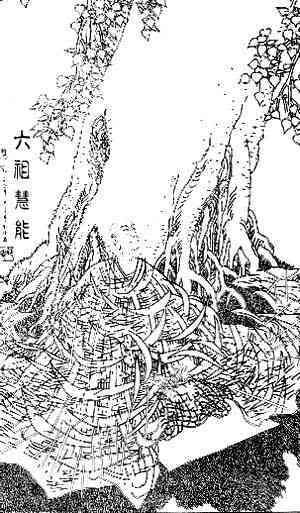 菩提本无树 明镜亦非台 本来无一物 何处惹尘埃
 俗姓卢,祖籍范阳(今河北省涿县)。慧能于公元672年到湖北黄梅参拜弘忍大师学法。慧能初见弘忍,弘忍便问他﹕「你是那里人? 来这里求取什么 ?」慧能回答﹕「弟子世岭南人,来到这里不求其它,只求「作佛」。」弘忍听了仍随口说﹕「你世岭南人,哪里能「作佛」! 」慧能回答﹕「人有南北之分,「佛性」并无南北之分。」这才使弘忍微微吃惊。慧能的回答使弘忍不便回绝,就安排他随众劳动,在碓房舂米。慧能乐于从命,终日舂米,干得欢快。当时弘忍的徒众有700人。在慧能入寺八个月之后,弘忍命各人呈上一首偈语,这实际上是一场考试,他要选择继承人。但慧能没资格参加,因为他只是干杂事的。神秀是众僧中的的上座和尚,他在半夜三更时分,独自掌灯,在佛堂的南廊写下一偈﹕「身是菩提树,心如明镜台,时时勤拂拭,莫使有尘埃。」清晨时,弘忍见到此偈后漠然不语,慧能闻声来到廊下,他要求也做一偈,得到许可,于是他高声念道﹕「菩提本无树,明镜亦非台,本来无一物,何使惹尘埃。」弘忍看到是慧能,就叫他退下,第二天弘忍把慧能给叫去,为慧能讲经又把世代相传的法衣交给他正式传他为禅宗六祖,并为他的安全着想,亲自送他到江州的渡口,吩咐他非要到必要的时机,不要把自己是禅宗六祖的身分讲出来,免得有禅宗的僧人来争夺。慧能来到岭南,渡过了15年的隐居生活。在唐高宗年间(676年),在广州遇到印宗法师,印宗法师为他剃发,授戒。至此,慧能才算是正式的僧人,在此之前只是「行者」。
不久慧能又从广州到了曹溪宝林寺﹕在这里,慧能正式「开山」传法。这时候,他在禅宗的地位得到确立,被称为「六祖大师」。而神秀则在北方传法。从此,南北分流,形成禅宗的南北两派。武后、中宗召请,终不赴京。禅宗自初祖以来,无顿渐之分,自六祖慧能开启顿门,嗣后并成为禅宗的正统。得法弟子四十人,其后支派并起,成为唐以后中国佛教的主流。或作惠能。门人法海编录其法语为《六祖坛经》。公元713年慧能在新州圆寂,弟子将其遗体应回曹溪,法相一直保持至今。
禅宗 -- 特重禅观,不重教理,自称教外别传。以菩提达摩为初祖,下传慧可、僧璨、道信、弘忍,弘忍之后分成南宗慧能,北宗神秀二派。北宗强调渐修,南宗主顿悟。弘忍圆寂后,北宗神秀大阐宗风于长安、洛阳。中唐以后,南宗成为禅宗的正统,并形成曹洞、云门、法眼、沩仰、临济五家。但宋朝以后则仅存曹洞、临济二脉。或称为佛心宗。
不久慧能又从广州到了曹溪宝林寺﹕在这里,慧能正式「开山」传法。这时候,他在禅宗的地位得到确立,被称为「六祖大师」。而神秀则在北方传法。从此,南北分流,形成禅宗的南北两派。武后、中宗召请,终不赴京。禅宗自初祖以来,无顿渐之分,自六祖慧能开启顿门,嗣后并成为禅宗的正统。得法弟子四十人,其后支派并起,成为唐以后中国佛教的主流。或作惠能。门人法海编录其法语为《六祖坛经》。公元713年慧能在新州圆寂,弟子将其遗体应回曹溪,法相一直保持至今。
禅宗 -- 特重禅观,不重教理,自称教外别传。以菩提达摩为初祖,下传慧可、僧璨、道信、弘忍,弘忍之后分成南宗慧能,北宗神秀二派。北宗强调渐修,南宗主顿悟。弘忍圆寂后,北宗神秀大阐宗风于长安、洛阳。中唐以后,南宗成为禅宗的正统,并形成曹洞、云门、法眼、沩仰、临济五家。但宋朝以后则仅存曹洞、临济二脉。或称为佛心宗。
One day, Hong Ren (Hung-jen), the fifth patriarch, called his disciples together and instructed them: "Each of you write a verse and bring it to me. I will read your verses, and if there is one who is awakened to the cardinal meaning, I will give him the robe and the Dhama and make him the Sixth Patriarch. Hurry, Hurry!"
The disciples returned to their cells, overwhelmed by the master's request. They agreed to let the first among them, Shen Xiu (Shen-hsiu), take on the task of composing a verse. Though well-instructed in the sutras, Shen Xiu was still far from enlightenment and the master's instructions threw him into a deep anxiety. At length he produced his verses and at midnight wrote on the middle wall of the south hall:
The body is the Bondhi tree, The mind is like a clear mirror. At all times we must strive to polish it. And must not let the dust collect.
Master Hong Ren was the first to see the verses the next morning. Assembling of the monks, he burned incense before the inscription on the wall. The disciples were filled with wonder and consider the question of succession settled. The master, however, called Shen Xiu aside. Having confirmed his suspicion that Shen Xiu had written the verses, the master said to him: "The verse you wrote shows that you still have not reached true understanding. You have merely arrived at the front of the gate but have yet to be able to enter it." As the verses make evident, practice can help ordinary persons, but it cannot bring them to perfect enlightenment. "You must enter the gate and see your own original nature..."
He left Shen Xiu to compose further verses. Days passes, but the first monk of the community could not produce a sign of his enlightenment.
Hui Neng, a young monk, heard about the verse and immediately realized that it did not express enlightenment. He formulated a new verse and have it posted on the wall of the west hall:
Originally there is no tree of enlightnment, Nor is there a stand with a clear mirror. From the beginning not one thing exists; Where, then, is a grain of dust to cling?
At midnight, Hong Ren summoned Hui Neng and conferred on him the Dharma of Sudden Enlightenment and the patriarchal robe with the words: "I make you the Sixth Patriarch."
From "Zen Buddhism: A History vol.1" by Heinrich Dumoulin, 1994
The disciples returned to their cells, overwhelmed by the master's request. They agreed to let the first among them, Shen Xiu (Shen-hsiu), take on the task of composing a verse. Though well-instructed in the sutras, Shen Xiu was still far from enlightenment and the master's instructions threw him into a deep anxiety. At length he produced his verses and at midnight wrote on the middle wall of the south hall:
The body is the Bondhi tree, The mind is like a clear mirror. At all times we must strive to polish it. And must not let the dust collect.
Master Hong Ren was the first to see the verses the next morning. Assembling of the monks, he burned incense before the inscription on the wall. The disciples were filled with wonder and consider the question of succession settled. The master, however, called Shen Xiu aside. Having confirmed his suspicion that Shen Xiu had written the verses, the master said to him: "The verse you wrote shows that you still have not reached true understanding. You have merely arrived at the front of the gate but have yet to be able to enter it." As the verses make evident, practice can help ordinary persons, but it cannot bring them to perfect enlightenment. "You must enter the gate and see your own original nature..."
He left Shen Xiu to compose further verses. Days passes, but the first monk of the community could not produce a sign of his enlightenment.
Hui Neng, a young monk, heard about the verse and immediately realized that it did not express enlightenment. He formulated a new verse and have it posted on the wall of the west hall:
Originally there is no tree of enlightnment, Nor is there a stand with a clear mirror. From the beginning not one thing exists; Where, then, is a grain of dust to cling?
At midnight, Hong Ren summoned Hui Neng and conferred on him the Dharma of Sudden Enlightenment and the patriarchal robe with the words: "I make you the Sixth Patriarch."
From "Zen Buddhism: A History vol.1" by Heinrich Dumoulin, 1994
黄财神 (Yellow Dzambala)
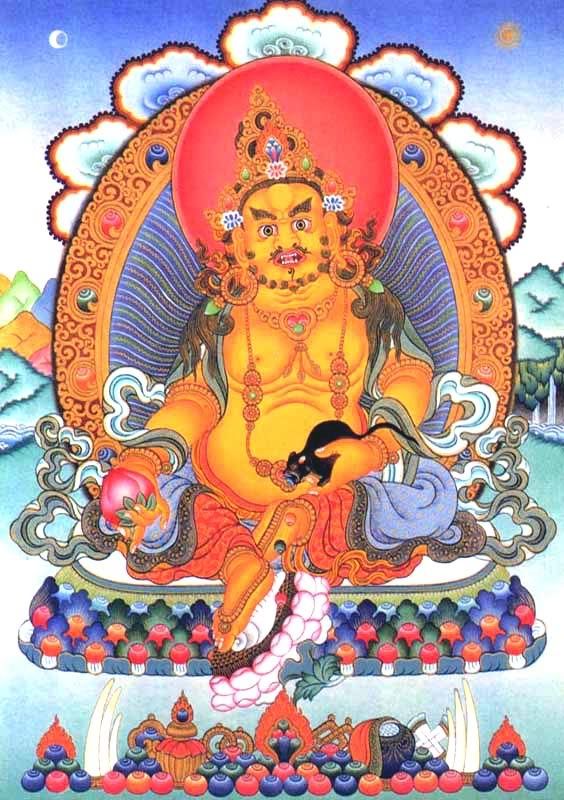 嗡藏吧拉,咋念咋夜梭哈
 OM ZAMBHALA ZALENDRAYE SOHA
黄财神,藏名藏拉色波,是密教之护法神祗,诸财神之首。黄财神是藏传佛教各大教派普遍供养的五姓财神之一,因其身肤黄色,故称为黄财神。相传黄财神过去是位菩萨,早已修证五道十地。昔日释迦牟尼佛在中印度摩陀国之灵鹫山(又译鹫峰山)讲说大般若经义时,诸方魔鬼神怪前来阻碍,令山崩倒塌,此时黄财神奋勇现身庇护,使得众多闻法比丘安然无恙。后来释迦牟尼如来嘱黄财神皈依佛法,助益一切贫苦众生,走佛教之路,逐成为大护法神。黄财神形相肚大身小,双手有力。肤色金黄,右手持布拉噶如意宝,左手捉吐宝鼠,头戴宝冠,身着天衣,蓝色莲花及珠宝璎珞作严饰。胸前挂乌巴拉念珠,以如意坐,左脚弯曲,右脚轻踩海螺宝,安坐于莲花月轮上。修持黄财神法、持诵其密咒,可获得黄财神庇,佑能增长福德、寿命、智能、物质及精上之受用,财源茂盛,免除贫穷。为令密乘行者有资财宏法利生,不被生活所逼,可安心向道,特赐予行者财利丰足。修持黄财神法者,需发无上菩提心,勤行布施,广结善缘,万勿贪悭,心诚如一。
黄财神一面二臂,五佛冠为头饰,矮小肚大,双臂劲力。右手持布拉噶如意宝,左手提着吐宝鼠。身着天衣,蓝莲花黄财神为北方司财众部之首,掌诸宝库,故修持黄财神法、持诵其密咒,可消灭六道穷苦,增长福德、寿命、智能,以及一切物质与精神上的受用,财源茂盛,免除贫穷。但行者需发无上菩提心,勤行布施,广结善缘,万勿贪悭,心诚如一。在藏传佛教中,也有财宝本尊与财神的供养法门,信众们若能发愿护持与祈请,必定能够如愿得到财神的广大庇佑,也藉此让人们有更多的机会接触佛的方便法,以达到近佛得愿、利益众生的目的。藏传佛教中最常见的财神本尊是黄财神,黄财神藏名「藏拉色波」,是藏传佛教各大教派普遍供养之护法神祗,为诸财神之首,因其身相金黄,故称黄财神。黄财神是护法的天神兼具施福的神尊,面貌庄严,身形雄壮,头饰五佛冠,一手持如意宝瓶,一手握著宝鼠,象徵数也数不尽的无穷财宝与吉祥富贵,身著天衣及珠宝璎珞为装饰,胸挂念珠,右足踩海螺天宝,左曲足以如意姿势安坐於莲花月轮上。黄财神的身、口、意、福业、功德等又化身成五色财神,即黄财神为意、红财神为口、白财神为身、蓝财神为福、绿财神为功德化身,而黄财神是集所有财神的化现总合,众生修习财神法的功德利益是非常殊胜的,可让修持者俱足因缘福报,以发心向善,不致被生活窘境所困扰,方便安心求道;而修习财神法门,只要以虔诚之心持诵念咒,即可获得黄财神的加持庇佑,能使人财利俱足,免除经济压力及一切的穷境,更能增长福德智慧并延寿。 供养财神的方法有很多种,例如火供、水供等,也可以请密教上师摆设坛城法,然而财神之所以应予人们赚钱,则是希望透过众生祈求达所愿,并帮助众生累积自身的福德,先能种下自己的善业福田,再将己身的能力用来造福人群、利益广大群众;修法者也要发无上菩提心,广结善缘、努力布施及回向十方,广开悲心福愿、行善积德,才是一个正信的修行者,以此发心来修财神法,也才能够得到圆满富足。 黄财神心咒:嗡贝夏玛拉耶娑哈 粘巴拉 杂能这耶娑哈 瓦素达能娑哈 黄财神心咒(梵):嗡藏吧拉,咋念咋夜梭哈金刚手菩萨为救度消除众生之贫乏穷困,化现财神臧巴拉。黄财神为诸财神护法之首。为使金刚乘行者有利益众生之资粮,不被生活所逼,可安心修行,特赐予行者丰足之财富与权势。 本尊形相肚大身小,双手有力,肤色金黄。右手持摩尼宝珠(布拉噶),左手轻抓口吐珠宝的吐宝鼠(蒙鼠纽列)。头戴五佛宝冠,身著天衣,蓝色莲花及珠宝璎珞作装饰。胸前挂乌巴拉念珠,以如意坐姿,左脚曲,右脚轻踩海螺宝,安坐於莲华月轮之上。 修习此法,持诵念咒,可获黄财神庇佑,能财源广进,免除穷困,以及一切经济压迫。但修法者需发无上菩提心,广结善缘,勤行布施。万勿悭贪成性,堕入饿鬼道。 心咒:嗡 臧巴拉 杂棱扎耶 梭哈
Dzambhala is the guardian of the South. He embodies the power of wealth to benefit beings. He symbolizes inner and outer wealth. Inner wealth is spiritual attainments gained through his practice. Outer wealth is material wealth that will enable easier dharma practice. His fat belly shows his prosperity and he has a mongoose on his left thigh that vomits jewels as he squeezes it. In his right hand he holds a flaming wish-fulfilling jewel which is symbolic for the riches one attains with the wealth of spirituality. This image is the more common seated form of Dzambhala, in which he has an opulent wrathful body type.
Sunday, June 22, 2008
地藏菩萨灭定业真言
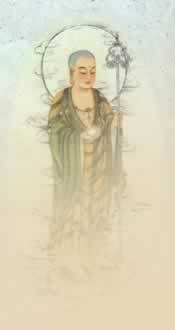 此咒实为藏经中《陀罗尼集经》所载之地藏菩萨法身印咒,因其梵文有摧伏、散灭、粉碎一切罪业、罪障、恶业之决,故华文自古称此咒为灭定业真言,此虽为地藏菩萨法身印咒之变称,然此称不失地藏菩萨本意。宋蒙山甘露法师不动集,蒙山施食仪中,也有详细记载。
 真言的原文:
唵,钵啰末邻陀宁,娑婆诃。
唵,钵啰末邻陀宁,娑婆诃。
地藏菩萨灭定业真言注音:
ōng,bō là mò lín tuó níng,suō pó hē。
ōng,bō là mò lín tuó níng,suō pó hē。
功德简介:
这是灭定业的咒。此咒是地藏王菩萨所说,诚心诵读此咒可以消灭一定要报应的罪业。在《地藏菩萨本愿经》诵读本的经首或经后,一般都注有此真言。“地藏灭定业真言”,在中国千年来受持者众多,得到感应而消去业障或恶业,因而逢凶化吉者不可计数。且您不一定要与地藏王菩萨有缘,也可受持灭定业真言,对于居家生活,平安健康及明心见性都有帮助,正所谓真言者,诸佛之秘密总持是也。如果专心一致的持“地藏灭定业真言”就可以接通地藏菩萨的电波,接受他大愿力的能量,让他帮你除去黑暗的业力,沉重的习气,转危为安,据古书记载有人因此助父生天、驱魔除患、大疫无忧、延年毕愿、转夭为寿、免盗贼厄、重病除愈、劝发菩提 …… 今人的感应更是不胜枚举。恭请常诵此真言及“南无大愿地藏王菩萨”圣号。
这是灭定业的咒。此咒是地藏王菩萨所说,诚心诵读此咒可以消灭一定要报应的罪业。在《地藏菩萨本愿经》诵读本的经首或经后,一般都注有此真言。“地藏灭定业真言”,在中国千年来受持者众多,得到感应而消去业障或恶业,因而逢凶化吉者不可计数。且您不一定要与地藏王菩萨有缘,也可受持灭定业真言,对于居家生活,平安健康及明心见性都有帮助,正所谓真言者,诸佛之秘密总持是也。如果专心一致的持“地藏灭定业真言”就可以接通地藏菩萨的电波,接受他大愿力的能量,让他帮你除去黑暗的业力,沉重的习气,转危为安,据古书记载有人因此助父生天、驱魔除患、大疫无忧、延年毕愿、转夭为寿、免盗贼厄、重病除愈、劝发菩提 …… 今人的感应更是不胜枚举。恭请常诵此真言及“南无大愿地藏王菩萨”圣号。
Obtained from website: http://www.dizang.org/zy/dzzy.htm
Subscribe to:
Posts (Atom)